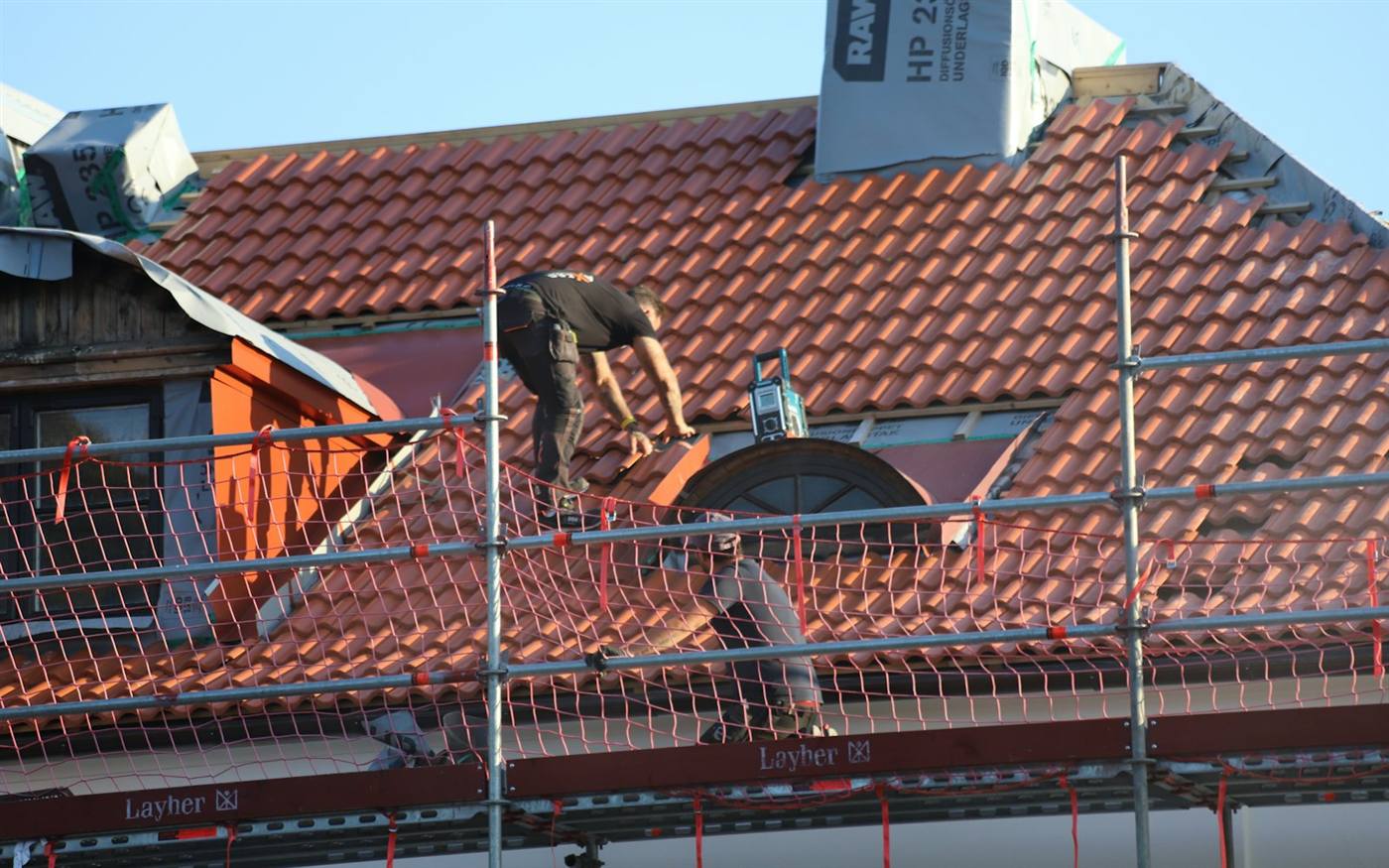
It is one of the most common questions we get asked across Lancaster, Morecambe and the South Lakes: can this roof be repaired, or does it need replacing? The honest answer depends on whether the problem is isolated or whether the whole roof is reaching the end of its life.
When a repair is usually enough
If the problem is in one place and the rest of the roof is sound, a repair is almost always the right call. Typical examples:
- A handful of slipped or cracked slates after a storm
- A loose ridge tile or a verge that has lost its mortar
- A lead flashing around a chimney that has lifted or split
- A blocked or worn valley on an otherwise good roof
- Damage to a flat roof over an extension or garage
When it is time to think about a new roof
Natural slate can last well over a century, but the nails, battens and underlay holding it on usually give up long before the slate does. Once that happens, slates start slipping all over the roof and each repair uncovers more. Signs that a re-roof is the better investment:
- Slates slipping repeatedly in different places, even after repairs
- Daylight visible through the roof from inside the loft
- Old bitumen felt that is crumbling or missing under the slates
- A sagging or uneven roofline
- Porous, flaking concrete tiles on a 1930s–1960s home
- Repair bills that keep coming back every winter
Check from the ground and the loft
You do not need to go on the roof to get a good idea. From the ground, look for gaps in the slate courses, slates lying in the gutter or garden, and ridge tiles that look out of line. In the loft, on a bright day, look for daylight, water staining on the timbers and damp insulation. Please do not climb onto the roof yourself: wet slate is extremely slippery.
Why photos matter
A good roofer should be able to show you exactly what they have found. We photograph every roof we inspect, so you can see the problem for yourself and make an informed decision, whether that is a small repair or a full re-roof.