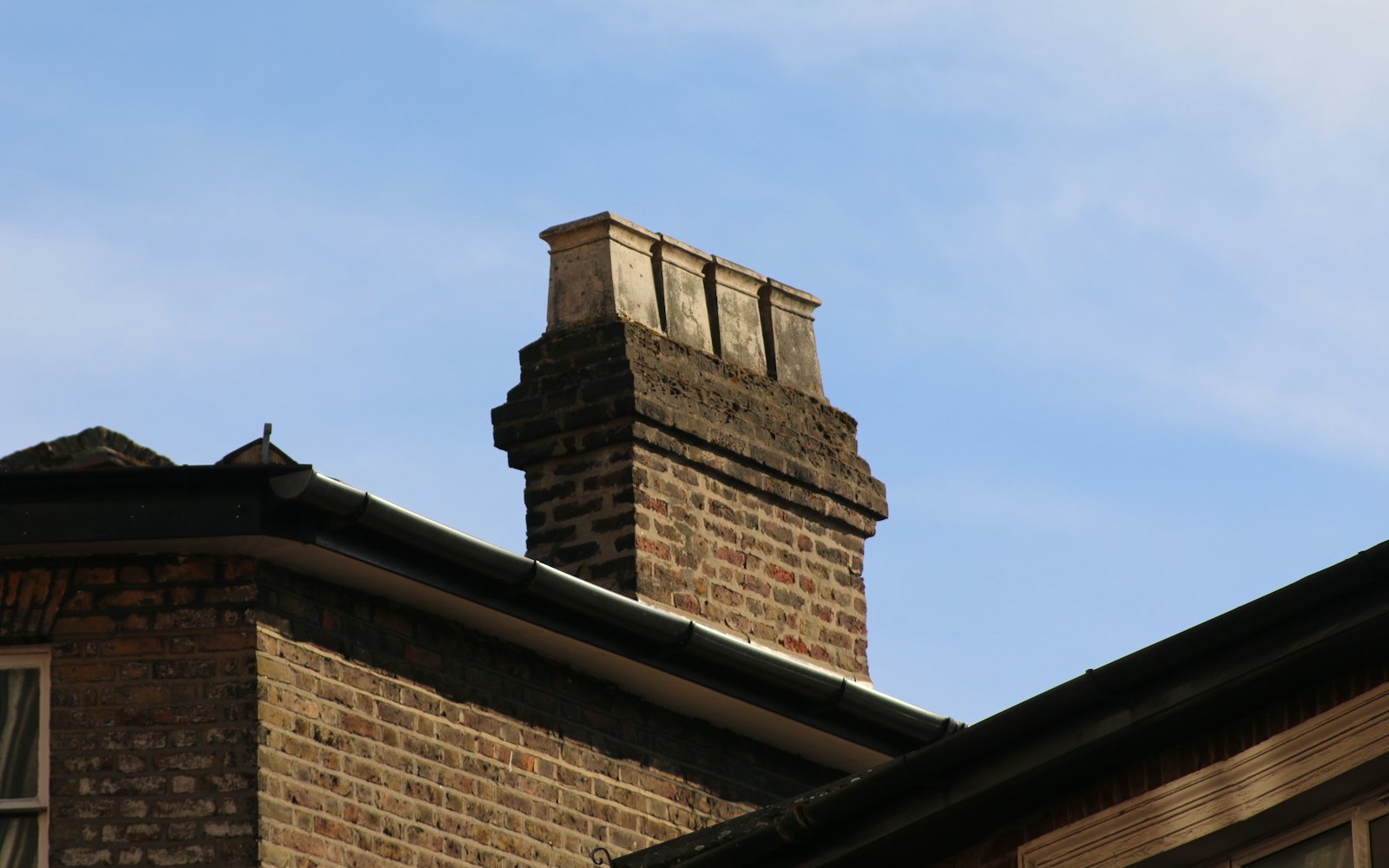
A damp patch on the chimney breast, often in a bedroom, is one of the most common problems in older homes across the northwest. The cause is almost always up on the roof, not in the room itself.
The usual causes
- Failed lead flashing where the stack meets the roof
- Cracked flaunching (the mortar around the chimney pots)
- Worn or missing mortar joints in the stack
- An open, unused chimney letting rain straight down the flue
- Condensation in a flue that has been sealed without ventilation
Repointing and re-flashing
Most chimney damp is fixed by raking out and repointing the stack, re-flaunching the pots and renewing the lead flashings. On older stone stacks, lime mortar is usually the right choice, because hard cement mortar can trap moisture and damage the stone.
Capping an unused chimney
If you no longer use the fireplace, fitting a ventilated cap stops rain and birds getting in while still letting the flue breathe. Sealing a flue completely without ventilation can cause condensation and more damp, so a small vent to the chimney breast inside is often recommended as well.
Removing a chimney stack
Redundant stacks can be taken down below the roofline and the roof slated over, removing a long-term maintenance headache. If the stack is shared with a neighbour, as it often is on terraces and semis, a party wall notice is usually required before work starts.
Why scaffolding is needed
Working safely around a chimney almost always needs scaffolding. It protects the roof below and allows the work to be done properly rather than from a ladder.